Archives
- 2026-10
- 2026-09
- 2026-08
- 2026-07
- 2026-06
- 2026-05
- 2026-04
- 2026-03
- 2026-02
- 2026-01
- 2025-12
- 2025-11
- 2025-10
- 2025-09
- 2025-04
- 2025-03
- 2025-02
- 2025-01
- 2024-12
- 2024-11
- 2024-10
- 2024-09
- 2024-08
- 2024-07
- 2024-06
- 2024-05
- 2024-04
- 2024-03
- 2024-02
- 2024-01
- 2023-12
- 2023-11
- 2023-10
- 2023-09
- 2023-08
- 2023-07
- 2023-06
- 2023-05
- 2023-04
- 2023-03
- 2023-02
- 2023-01
- 2022-12
- 2022-11
- 2022-10
- 2022-09
- 2022-08
- 2022-07
- 2022-06
- 2022-05
- 2022-04
- 2022-03
- 2022-02
- 2022-01
-
In order to test whether the enhanced hyperpolarization in t
2022-07-16
In order to test whether the enhanced hyperpolarization in the presence of increasing amounts of extracellular Ca2+ could be due to an ionophore effect of NS309, red cell uptake of 45Ca and partition of 45Ca into a water/n-octanol phase +/−100 μM NS309 were determined. However, no indication of iono
-
Most of the tumors showed
2022-07-16
Most of the tumors showed relatively higher GalR1 mRNA levels than the controls (Fig. 1a, Table 3). However one patient with the lower GalR1 mRNA levels (#12) had, in fact, relatively lower levels of transcript for galanin and the other galanin receptors. Patient #10 and 4 who were also expressing l
-
In summary metagenome sequencing of paddy soil was performed
2022-07-16

In summary, metagenome sequencing of paddy soil was performed with 55.68 Gb sequences, and subsequent data mining was performed for functional profiles and metabolic pathways. Several GH family proteins, such as amylases, cellulases, xylanases, and galactosidases, were explored in the paddy soil met
-
In case where an extreme loop of
2022-07-16
In case where an extreme loop (of up to 45 nt) is allowed, as in G3 + E3 + XX, however, a G3+GQ loop maximum of 3 was adequate to reach high J-statistic. It continued to increase only up to 6 as the loop maximum. (Fig. 1A) Hence we suggest using a G3+GQ loop maximum between 3 and 6 where an extreme
-
Despite their undisputed importance however FPR receptors ar
2022-07-16
Despite their undisputed importance, however, FPR receptors are not in the limelight of GPCR-related research (for review [12] and references therein). We, therefore, draw attention to this GPCR receptor family, in order to re-initiate FPR-related research, particularly in the light of biased agonis
-
This study introduces a mouse
2022-07-16
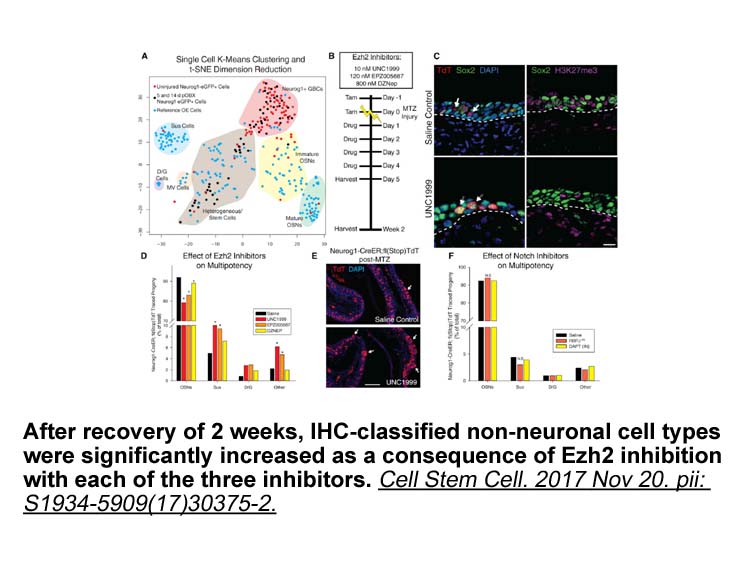
This study introduces a mouse model carrying the point mutation R258W in Ffar1, which abolishes the stimulation of insulin secretion in response to long chain fatty acids. The minimal genetic alteration mirrors the human situation and has the advantage over conventional knockout/congenic mouse model
-
Phosphorylation of the p Rel A dimer
2022-07-15
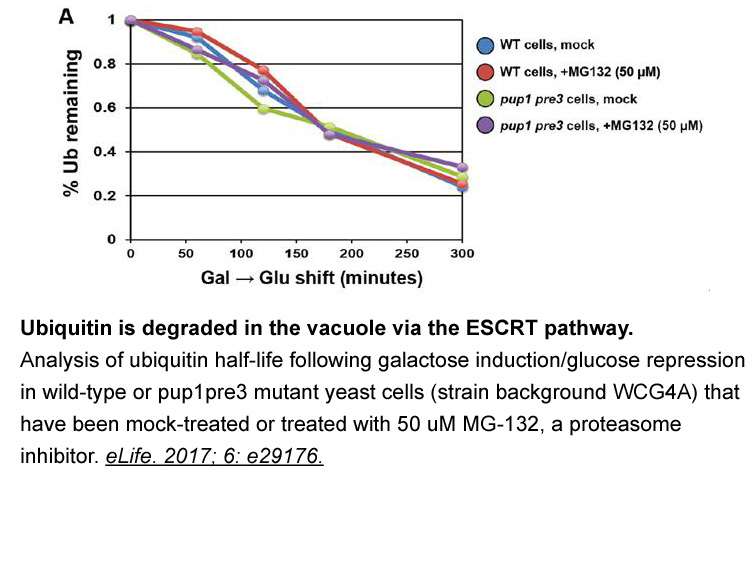
Phosphorylation of the p50-Rel A dimer, the most common form of NF-κB, leads to ubiquitination of IκB proteins (Fig. 2). Poly-ubiquitination of IκB proteins identifies them for rapid degradation by 26S proteasomes, thereby allowing NF-κB dimers to undergo nuclear translocation and activate the trans
-
GSK2292767 To validate that our natural experiment operates
2022-07-15
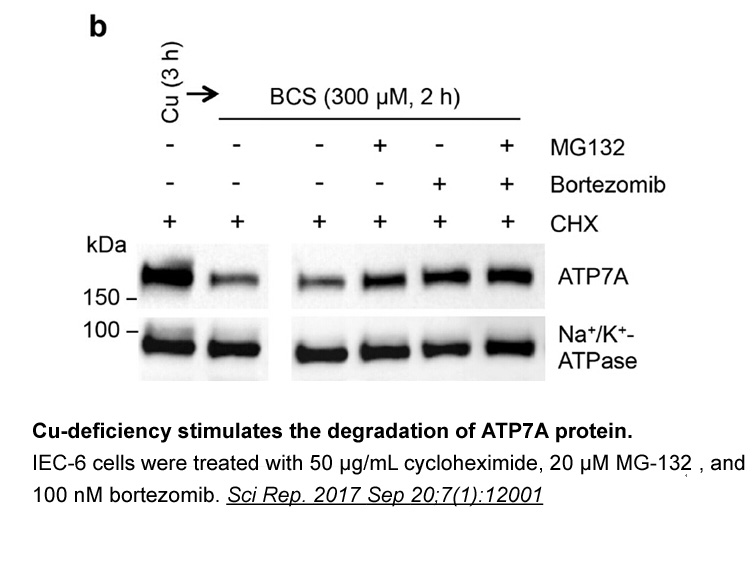
To validate that our natural experiment operates primarily through a large negative shock to the risk-taking incentives provided by option compensation measured by vega, we do two sets of tests. First, we confirm a significant drop in vega after the adoption of FAS 123R for treated firms relative to
-
The present study was designed to clarify
2022-07-15
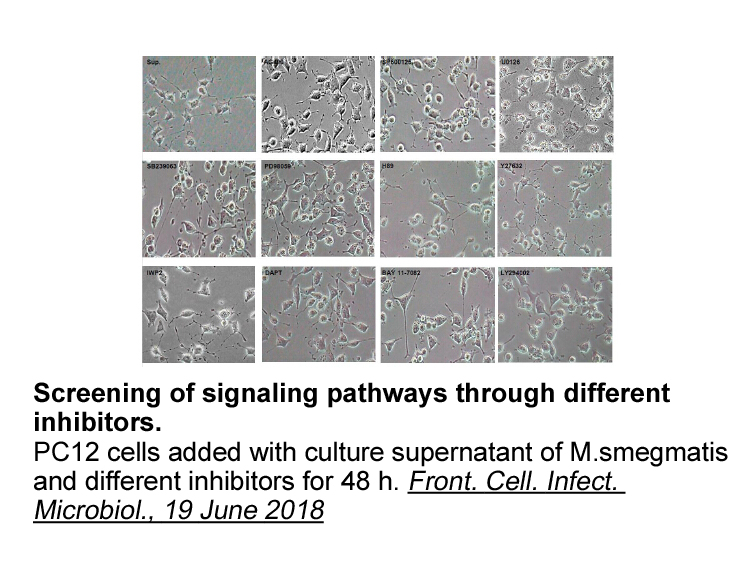
The present study was designed to clarify the distribution and the function of the endothelin receptors in the guinea-pig urinary bladder. We found that endothelin-1 produced a clear tonic contraction via both Epinephrine HCl subtypes, the endothelin ETA and ETB receptor, and that sarafotoxin S6c al
-
Recent studies are beginning to explore this complex
2022-07-15
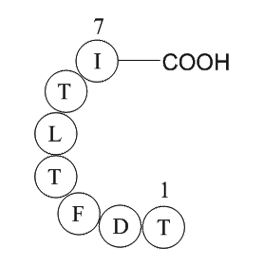
Recent studies are beginning to explore this complex interplay of pathways. For example, intracellular trafficking of poly(lactic-co-glycolic acid)(PLGA) based nanoparticles was studied in detail using 30 different Rab proteins as markers for intracellular transport vesicles (involved in exocytosis,
-
The coenzyme S adenosylmethionine SAM binding pocket of
2022-07-15
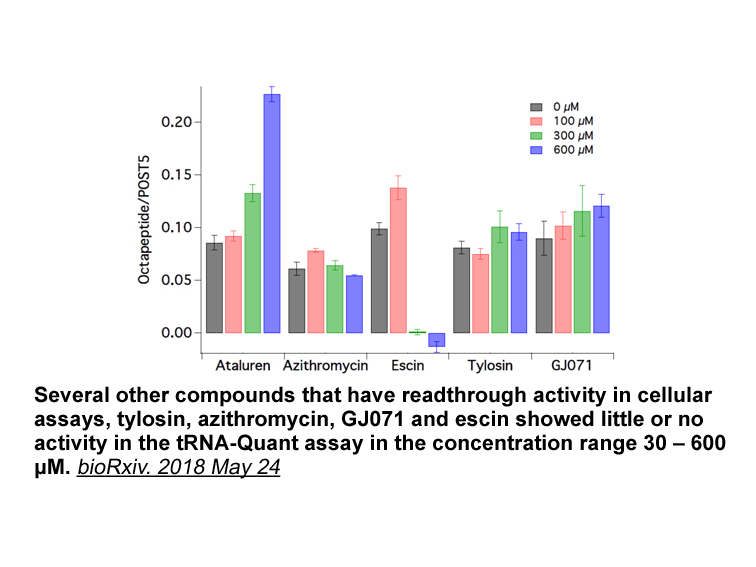
The coenzyme S-adenosylmethionine (SAM)-binding pocket of Set7 is connected to the histone-tail binding groove by a conserved lysine-channel, similarly observed in vSET (Figures 2D and S3). The Set7 SAM-binding pocket is negatively charged as observed in other known HMTase structures. However, the b
-
In Arabidopsis GCN containing protein complexes are found
2022-07-15
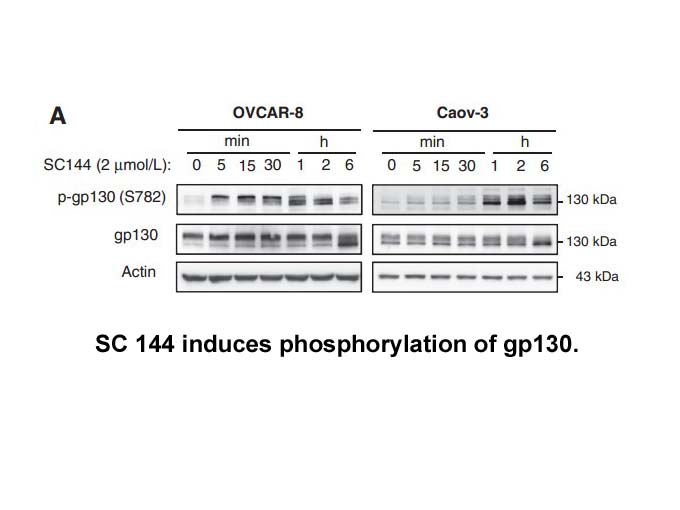
In Arabidopsis, GCN5-containing protein complexes are found to be involved in cell differentiation, leaf and floral organogenesis [[8], [9], [10]]. AtHAC1 has involvement with root elongation, flowering, fertility and de novo shoot regeneration [11,12]. AtHAM1 and AtHAM2 control flowering time by ep
-
Literature review suggests a strong presence of central hist
2022-07-15
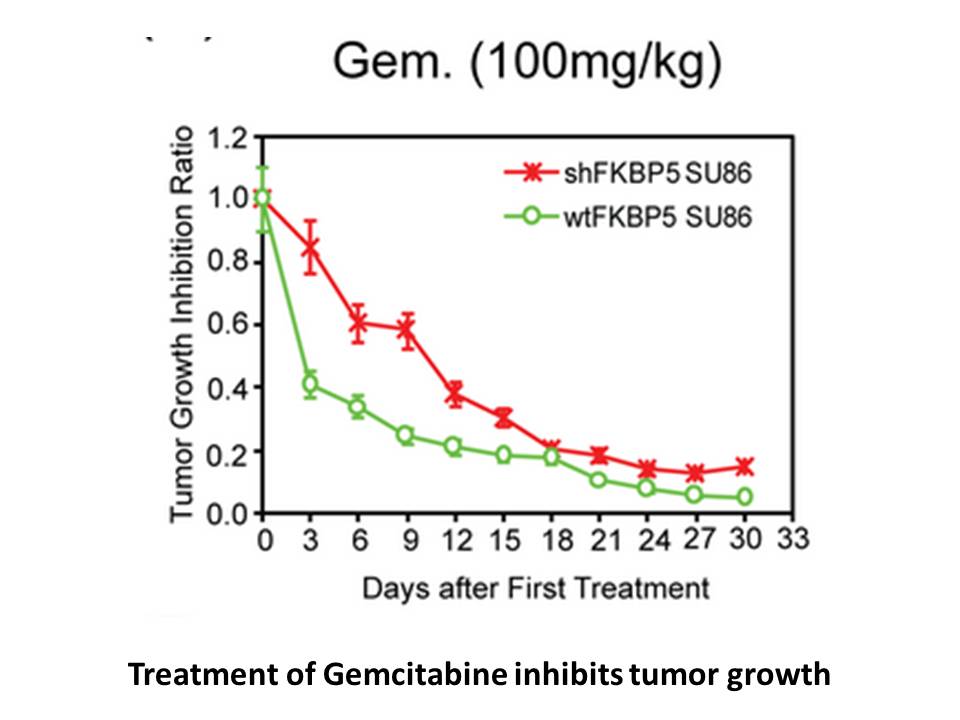
Literature review suggests a strong presence of central histaminergic transmission in the prostanoid areas targeted by caffeine to induce its behavioral actions. Interestingly, it is reported that caffeine administration increases the histamine neuronal activation and release of histamine in the br
-
In this paper we demonstrate a diatomaceous earth
2022-07-15
In this paper, we demonstrate a Phenacetin based TLC-SERS sensing technique combined with machine learning analysis to quantitatively detect seafood allergen in real spoiled tuna samples. We fabricate a diatomaceous earth TLC plate as a separable SERS-active substrate to detect histamine in artific
-
Taken together this study provides the proof of concept that
2022-07-15
Taken together, this study provides the proof of concept that our novel heterologous human/rat HER2-specific T cell vaccine HuRt-TEXO, which is capable of stimulating both humoral and CTL responses leading to potent antitumor immunity through the circumvention of HER2 tolerance in double transgenic
8207 records 455/548 page Previous Next First page 上5页 451452453454455 下5页 Last page